

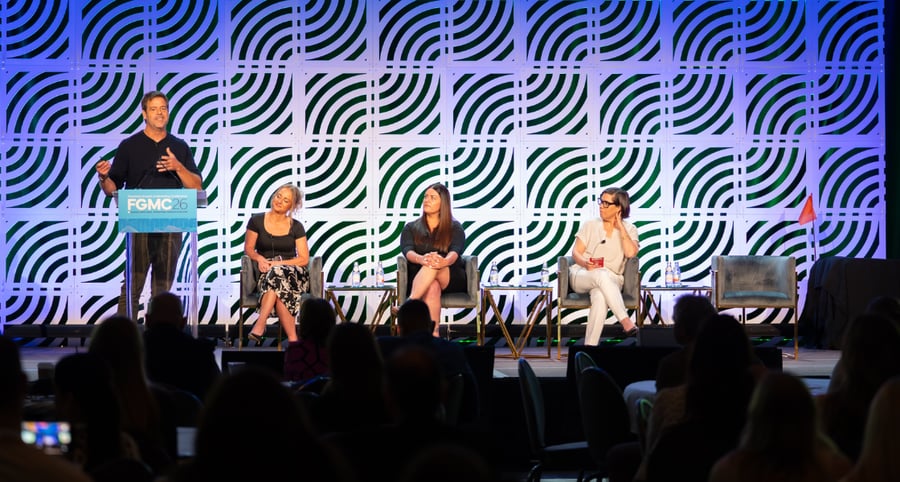
At the Franchise Marketing & Growth Conference (FGMC), one clear theme surfaced across sessions and side conversations: franchise systems don’t lack creative marketing ideas or tactics, they face a challenge for local operators to execute.
National strategy is only as strong as what gets used in the field. In most systems, franchisees balance marketing with staffing, operations, customer experience, and daily surprises. The franchise brands that stood out weren’t simply “doing more.” They built smarter systems that make marketing easier to execute, adopt, and govern.
Here are three trends we heard repeatedly, and what franchise marketing leaders can learn from them.
Keep it Simple and Create Resource Libraries That Allow for Easy Localization
Many brands have invested heavily in portals, creative libraries, and campaign toolkits. But availability isn’t the same as usability. Brands can create hundreds of assets, but franchisees need to be able to quickly identify the steps and resources needed to leverage those assets; a lack of adoption is rooted in the impression of inaccessibility.
Franchisees don’t always adopt the most sophisticated option, they go for what’s most tangible and executable, especially when local marketing feels like “one more thing” on a full plate. The shift is from creating more assets to creating field-ready marketing: programs designed to remove friction and reduce decision fatigue.
What field-ready marketing tends to include:
- A clear path, not a menu of options: what to do first, next, and after that. Add step-by-step instructions that assume the operator is not a marketer
- Templates and scripts that eliminate guesswork but allow for local customization
- Timelines and checklists that match how franchisees plan their weeks and outline the “why” behind a timeline
- Examples of what “good” looks like so execution feels copyable
If a franchisee can’t understand what to do in a few minutes and execute in short blocks of time, then the program is at risk no matter how strong the content is.
Many franchise systems span regionally or nationally, so audiences and communities vary by location. The best franchise systems have created personalized marketing programs that help franchisees foster their local community through events, partnerships, and micro-influencers to grow revenue and customer base.
What to do next
- Audit your top three local initiatives and ask: Where does execution slow or stall?
- Replace “resource-heavy toolkits” with a default execution path and a few controlled variations for different markets.
- Redesign playbooks to function as operational tools, not marketing archives.
Adoption is the goal built through trust, peer validation, and governance
Franchisees are more likely to commit when they understand the business case, feel included, and hear success validated by peers. Adoption is a system-level strategy.
Across discussions, three adoption drivers stood out:
1. Trust is built when “what” and “why” stay connected
Franchisees need clarity on what matters and why it matters.
The more leaders connect local marketing actions to unit-level outcomes without making the message complex, the easier it is for owners to choose participation.
2. Peer proof often lands better than corporate proof
Many franchise systems already have strong ideas inside the network. The difference is whether the system surfaces them consistently. When operators see others winning with a program, skepticism drops and adoption rises.
Common peer validation mechanisms discussed at FGMC included:
- Structured peer sharing and peer-led learning
- Simple friendly competition
- Highlighting franchisees in the system that are outperforming
- Internal communities that make it easy to share local wins
3. Governance is both protection and enablement
Governance can sound like restriction, but the best versions increase confidence. Clear guardrails help franchisees move faster while staying aligned, especially with brand voice, claims, promotions, and creative standards.
Governance also helps franchisor teams stay consistent in what they approve, encourage, and consider to be on brand, which reduces confusion and frustration for everyone.
What to do next
- Build communication loops that include a mix of operator types (not only advocates)
- Create a repeatable rhythm for peer learning (monthly best practice share, “what worked in my market,” template swaps)
- Clarify brand non-negotiables versus local flex areas so operators know where inventiveness is welcome
AI is moving from experimentation to governed enablement
AI was part of the FGMC conversation but not in the “AI will replace marketing” way. The practical takeaway was this: AI is already entering franchise systems through the field, whether corporate teams have planned for it or not.
That’s why the trend is shifting from experimentation to governed enablement, using AI to increase speed and consistency without creating brand risk or uncontrolled variability.
A helpful framing we heard repeatedly regarding AI adoption is to start with:
- What is the operational problem we’re trying to solve?
- Where is the field losing time?
- Where is variability hurting performance or brand consistency?
High-level AI use cases that fit the franchise reality (when governed properly):
- Localization support: adapting messaging for a market while preserving brand voice
- Drafting and iteration: first drafts of posts, emails, community outreach messages
- Simplifying complexity: turning strategy into franchisee-facing steps
- Support and enablement content: FAQs, internal guides, training reinforcement
Brands get into trouble when every location invents its own AI approach. That creates uneven quality, inconsistent voice, and avoidable compliance risk. The executive opportunity is to make good use of the default by supplying clear rules, tools, and workflows.
What governed AI enablement typically includes:
- Simple brand voice guidelines for AI-generated content
- Approved tools and workflows
- Lightweight review rules specifying what must be checked and by whom
- Training that focuses on real field scenarios, not theoretical prompts
What to do next
- Provide a set of approved prompts and templates aligned to your playbooks
- Set clear parameters around what AI should not produce without review, such as brand claims, regulated categories, and sensitive topics.
Execution is the differentiator
FGMC reinforced that the next wave of franchise marketing advantage won’t come from having the most campaigns or tools. It will come from designing marketing so it is:
- field-ready and simple to execute
- supported by trust, peer momentum, and clear governance
- accelerated (not destabilized) by AI
These themes connect directly to what we’re seeing across the category. Download our 2025 Franchise Trends Report for a deeper look at the shifts shaping franchise marketing, and the practical moves leaders are making to keep pace.


-1.png)
